
The Ultimate Guide to Living in Braintree, MA
Thinking about making a move to Braintree? Whether you’re a relocating professional, a growing family, or moving out of Boston for space + value, this guide gives you the real story — not a tourism pitch, not an MLS summary, but how it actually feels to live here day to day. 🏡
I’m Justin Rollo — Braintree resident, parent, coach, School Committee member, and long-time South Shore real estate advisor. I live here, I raise kids here, and I help people decide if Braintree fits their goals, budget, lifestyle, and commute. This guide gives practical clarity, grounded expectations, and honest trade-offs — because every “great town” fits different people for different reasons.
Why Braintree Works for Many Buyers
Braintree sits at a rare crossroads: big value jump from Boston, more affordability than Milton or Hingham, but not a starter-only market anymore. The community has evolved significantly, and the pricing, schools, and lifestyle reflect that shift.
Local Truth: Braintree was once considered the “value town” of the South Shore. Today, it’s a competitive mid-to-upper-tier market that appeals to buyers who want convenience, community, upside, and comfort — without paying the Hingham/Milton price premium.
The “7-Minutes-to-Everything” Lifestyle
Braintree residents often joke that everything you need is 7 minutes away — groceries, Target, the gym, restaurants, parks, fields, daycare, and multiple commuter options. Unlike some South Shore towns, you’re not driving 20–30 minutes for everyday errands.
- Red Line (Braintree Station)
- Highway access to Rt 3, I-93, and 128 (major commuting backbone)
- Multiple grocery chains + South Shore Plaza
- Youth sports + recreation spaces
- Local + emerging independent dining
It’s not boutique-walkable like Charlestown and it’s not farmland-quiet like Hanover — it balances suburban comfort with quick-reach convenience.
Neighborhood Deep Dive: How Each Area Feels
This is where most generic guides fall apart. Braintree is not one unified neighborhood — it’s a set of well-defined pockets, each with its own lifestyle, price points, housing styles, and commute dynamics.
The Highlands
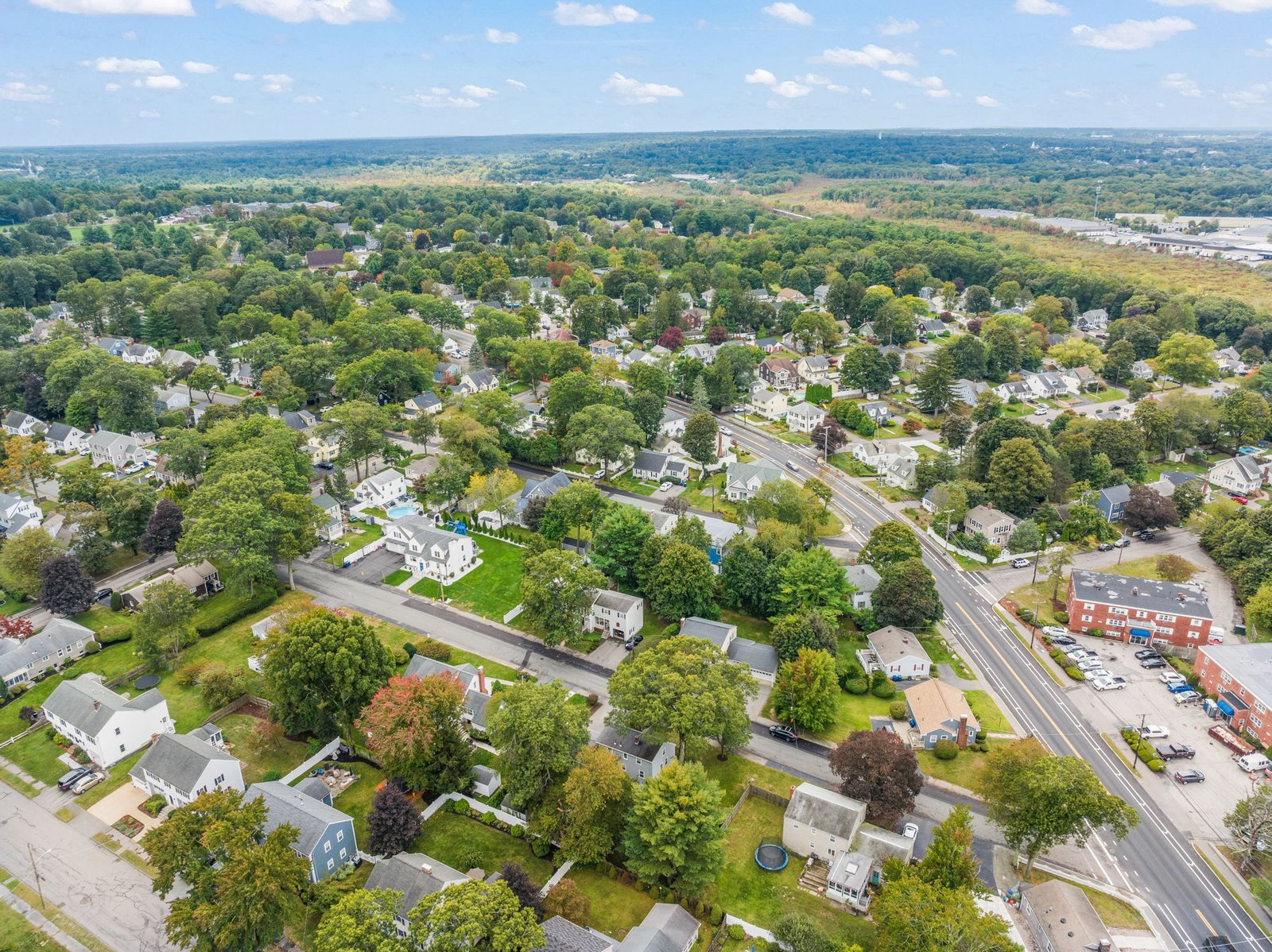
Quintessential New England suburb — well-kept homes, mature trees, winding connected streets, Colonial + Cape styles, and highly sought after micro-locations. Lots are often 8,000–12,000+ sq ft, and pride of ownership is obvious. This is frequently the #1 target for relocating buyers who want the “classic look” and long-term neighborhood feel.
Trade-off: commute friction — reaching the highway through surface roads can feel slower during peak times.
North Braintree (Thayer Academy Area + Weston Ave + Academy St)
Architecturally interesting, character-rich, older homes with presence. Some streets offer larger lots, historic charm, and upscale curb appeal. Proximity to Thayer Academy is a draw, as is quicker highway access.
Trade-off: traffic during peak times due to South Shore Plaza + square activity.
Hollingworth / Tremont Pocket
Wide lots, mature construction, and extremely desirable streets for buyers prioritizing space + privacy. This pocket feels residential, established, and highly livable.
East Braintree
Best value relative to the rest of town — smaller homes, Capes + bungalows, and strong upside potential because of location + development corridor momentum. Proximity to Watson Park and new activity is a major plus for lifestyle buyers and investors.
Insider Value Call: East Braintree remains the most strategic long-term “buy for value + appreciation runway” sub-market.
Housing + Pricing Evolution
Five to six years ago, million-dollar sales were rare in Braintree. Today, they’re normal in several pockets due to demand, renovation cycles, and South Shore lifestyle recalibration post-COVID.
- Braintree is no longer entry-level
- Condos are limited — a long-term supply constraint
- Renovation inventory sells fast even when needing work
- Schools + commute = premium stickiness
For buyers moving from Boston, the most surprising takeaway is that lot size, micro-location, and traffic flow often drive price variation more than square footage alone.
Real-World School + Community Insight
As a School Committee member, I see both the strengths and the work ahead. Braintree’s schools combine inclusive services, experienced staff, and strong extracurricular identity, especially athletics. Community engagement is strong, and families tend to remain long-term.
Where community “locks in”: when kids enter elementary school — that’s when parents connect, schedules align, and the long-term decision feels validated.
Dining, Lifestyle & Recreation
Historically known for chains, Braintree is now seeing a more balanced mix as independent restaurants gain momentum. Local favorites include Cielo Mexican, The Tree, Southside Tavern, and Jake & Joe’s. Recreation is anchored by Pond Meadow Park, Watson Park, Hollingsworth fields, and a year-round youth sports culture.
For some families, the weekly rhythm is defined by fields, gyms, practices, and carpools — Braintree is unquestionably a sports-centric town. ⚾
10-Year Forecast (Realistic, Not Promotional)
- 5%–8% annual appreciation remains believable
- New development likely in Ivory Street corridor under MBTA Communities Act
- Future HS capital project likely → potential tax impact
- More rental development until condo cycle returns
- Continued demographic shift toward higher-income earners moving in
Positioning line: Braintree is where convenience, stability, and community pride meet — without the price tag of prestige-tier towns.
Who Braintree Is — and Isn’t — Best For
- Best if you value: access to Boston, strong sports culture, suburban comfort, long-term community, mid-to-upper-tier pricing without Hingham taxes
- Not ideal if you want: nightlife + walkability at your doorstep, ultra-luxury architectural variety, or fast-track development atmosphere
If Braintree were a car, it’s not a Range Rover town — it’s a Jeep town: capable, reliable, comfortable, lived-in, and proud of it.
Your Next Step
If you want help identifying your best micro-area, floor plan type, or long-term fit, that’s where I can save you months of uncertainty. Let’s map what matters to you and match it to the right streets.


